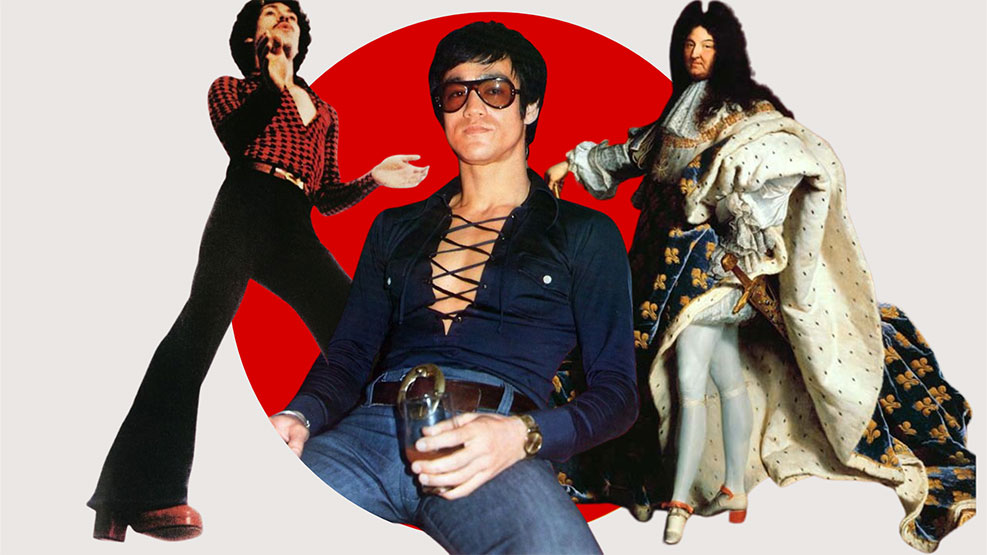
Once upon a time, men used to dress like they meant it. Bell bottom pants. Color. Bold prints. Lustrous, stylized hair. Even high heels and platform shoes. *GASP* And believe it or not, it was manly.
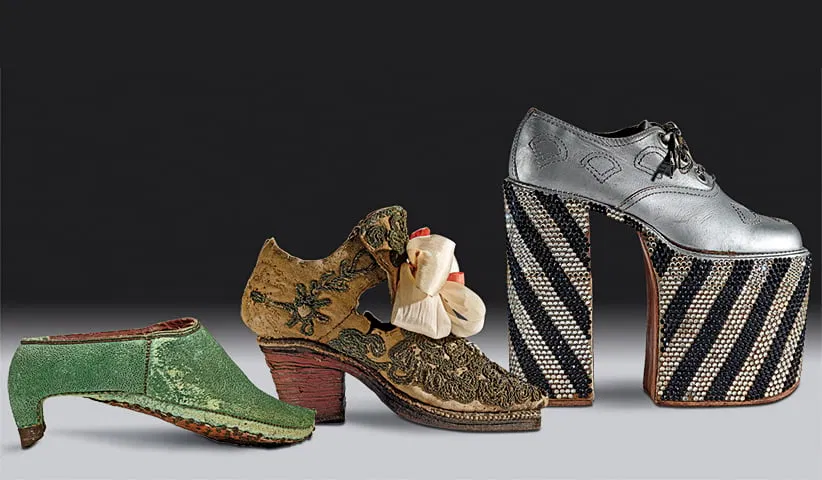
A men’s 17th century Persian shoe; French or English mid-17th century shoe; 1970s platform heel worn by Elton John.
There was a time when men led with fashion–when style was a sign of status, and true masculine power. Yet, today, it’s a different story. Men have largely taken a back seat (or have perhaps been sent there) within the fashion world. Walk into any store today and you’ll see it. While countless racks and square feet are allocated for women, the men are delegated to whatever space is leftover. Their sections within stores are often much smaller, and the clothes less diverse, and far less imaginative. What happened to men’s fashion?
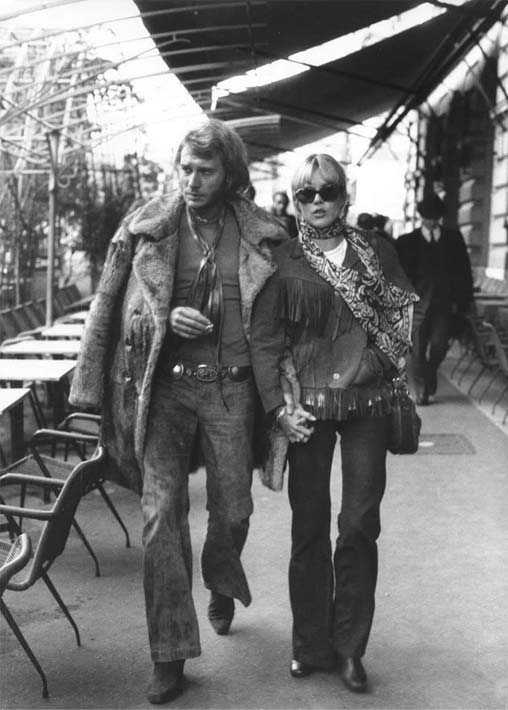
French singer, Johnny Hallyday (pictured with singer and actress Sylvie Vartan), in a stylish ensemble complete with a scarf and a fur coat in the 1970s.
The Big Lie about Men’s Fashion
Somewhere along the way, a myth seemed to take hold: that caring too much about style makes you less of a man. That style and fashion are feminine. And as a result, men’s fashion has, for the most part, become an abandoned art. Stripped of color, flair, risk, and individuality.
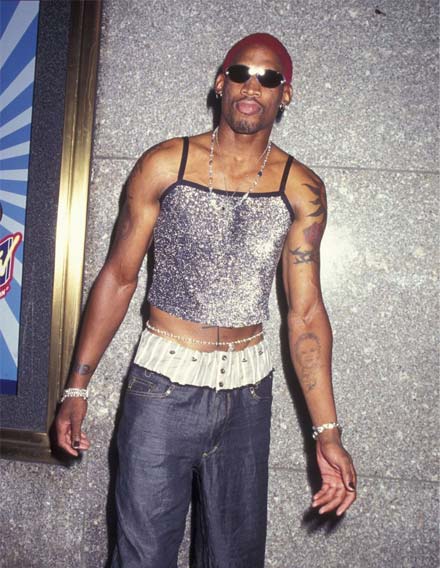
While mainstream fashion was fixed on business casual and timeless minimalism in the 1990s, basketball player Dennis Rodman (above) was known for his boundary-pushing outfits.
Of course, there are plenty of men out there who have great style–men who dress boldly, uniquely, unapologetically today. Men who, just as most women, use fashion to reflect their identity, values, or imagination.
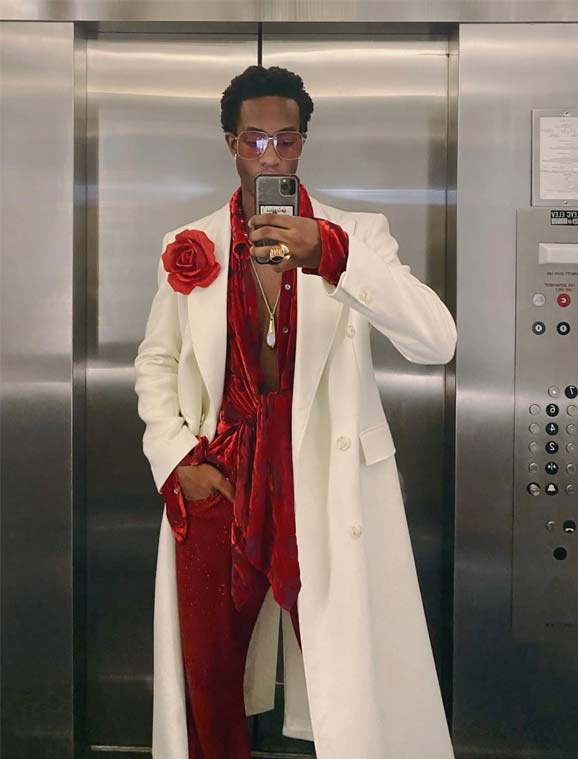
Wisdom Kaye, TikTok’s “best dressed guy”, is known for his creative, diverse, and experimental outfits.
But for the majority, it is a sea of sameness. Rather than being a vessel for self expression, men’s fashion has become a formula. The same neutral tees, straight leg jeans, and button down shirts.
Today, men’s fashion is minimal, repetitive, and painfully predictable.
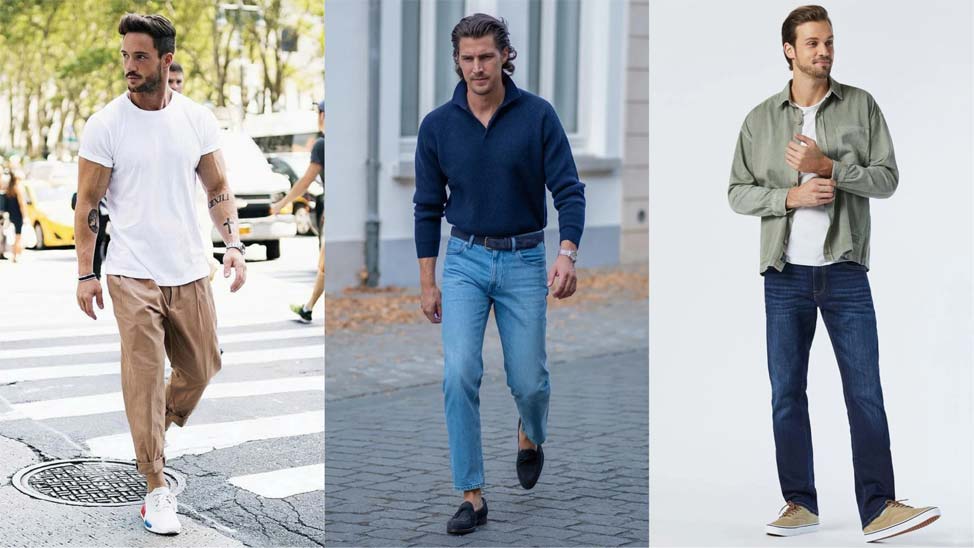
Walk the streets today and you’ll notice a pattern among men’s outfits: joggers, straight leg jeans, tees and button down shirts with little variety and difference.
Men’s Fashion (Historically): Bold & beautiful
This wasn’t always the case, of course. Throughout time, men’s fashion has historically been bold, stylish, and even flamboyant. Kings wore silk, ruffles, and heeled shoes. Noblemen adorned themselves in richly embroidered garments.
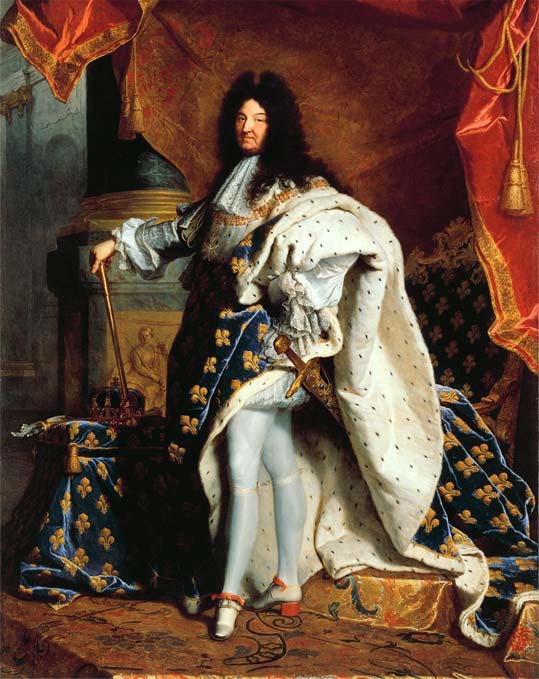
Portrait of Louis XIV (1701), King of France, in a dramatic ensemble complete with a pair of men’s heels.
Of course, fashion is a reflection of social norms, values, and rules of a given time. And as we know, with time, those things change. With the arrival of the 20th century came radically new norms and standards, particularly during the Roaring ’20s, led by the boundary-pushing women known as flappers. Ironically, the loosening of rigid fashion codes for women seemed to lead to a tightening of them for men.
Sure, men’s respectability was no longer measured by their use of top hats, vests, cravats, etc. But they seemed to be moved from one set of rules to another. Men’s fashion became greatly subdued and simplified. And the trendy pieces of the past had not simply become outdated, they became “too feminine” for men to wear. And to embrace them was to risk one’s masculinity.
Fast forward to the 1970s though and, once again, men were embracing flair and fashion. Disco music and escapism culture led to experimentation through fashion… Elton John, David Bowie, Freddie Mercury, and Mick Jagger all pushed the boundaries of men’s style, empowering men to have fun with fashion as well.
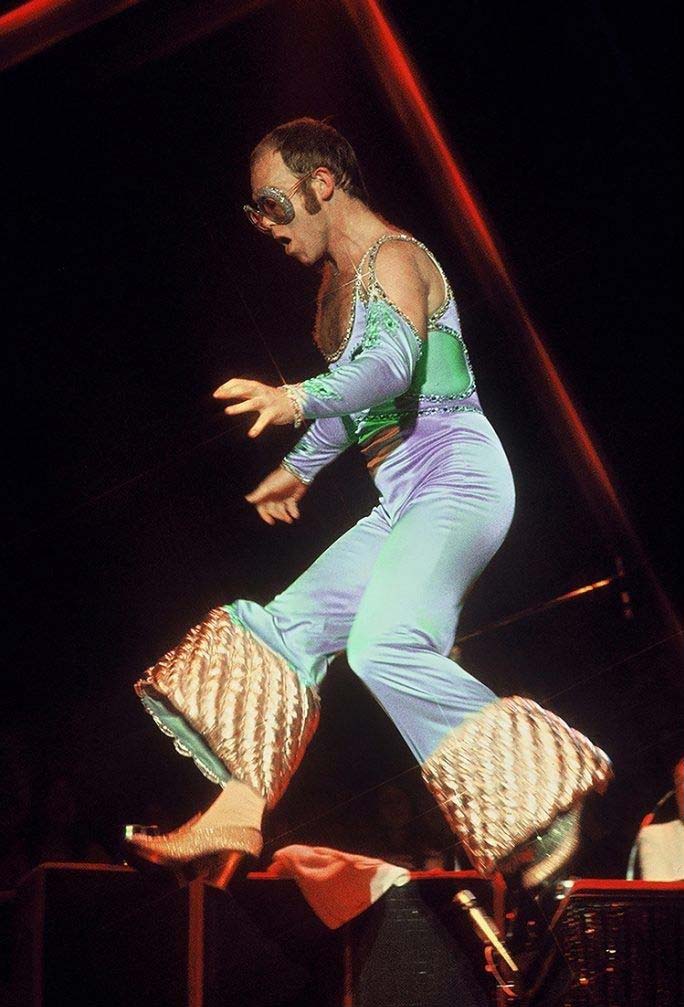
Elton John during a 1974 concert in Los Angeles, California.
This carried on throughout the ’70s and into the 1980s, until it began to fizzle out once more. After which, many pieces and styles were again labeled as far too feminine and flamboyant for them to wear. Suddenly, these styles were seen as a threat to their percieved level of masculinity. Perhaps this was a response to the growing awareness of the LGBTQ+ community during this time. As public conversations around gender and sexuality gained visibility, and the LGBTQ+ community made its presence known, certain styles naturally began to be coded as queer.
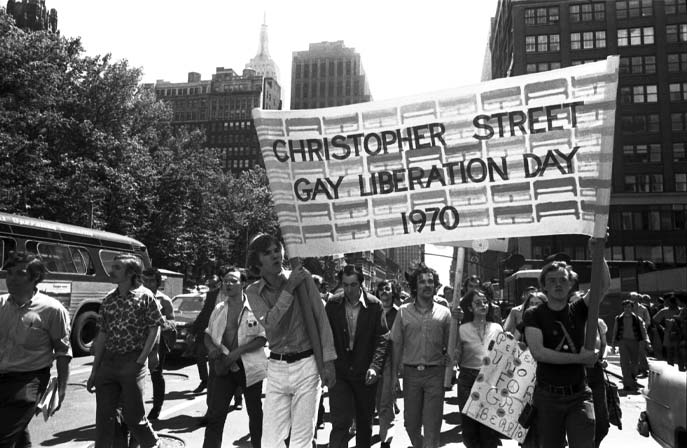
One of the first Pride marches held on June 28, 1970.
In response, mainstream culture may have attempted to draw stricter lines–using fashion as a way to distinguish groups based on sexuality. Men’s modern fashion adopted an image distinguishable for “masculinity” and “straightness”. Because unlike in the past, modern masculinity has been shaped by simplicity, minimalism, and a clear divide between men and women’s wardrobes.
Making Men’s Fashion Interesting Again
And yet, fashion is once again shifting.
Gen Z men, in particular, have begun to challenge these norms. Because why shouldn’t men be allowed to have fu with fashion too? On red carpets, in music videos, and across social media, they are embracing skirts, nail polish, crop tops, pearls. They’re blurring the boundaries that once confined men to a grayscale wardrobe.
Of course, while this shift is visible in public figures and curated feeds, it’s less common in everyday life. (Now, the same could be said for women as well, though that opens up an entirely different conversation about modern societal norms, comfort, and the quiet pull of complacency.)
Nonetheless, on an average weekday, bold self-expression in men’s fashion still feels like a rarity. Most still play it safe. And that gap—between what’s possible and what’s typical—says a lot about how masculinity is still policed.